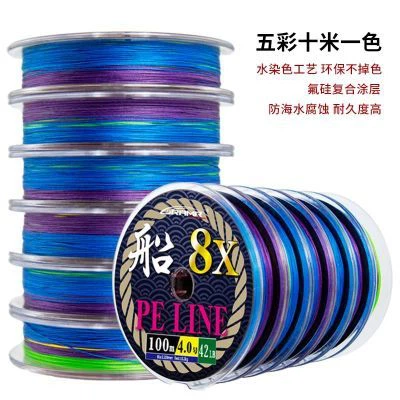
GUANMEI Fishing Gear Co., Ltd., established in 2000, specializes in the research, development, production, and sales of fishing lines and tackle. We produce high-quality PE braided lines, monofilament lines, fluorocarbon lines, and more, with a daily capacity of 800,000 meters and 30,000 packaged items.
-
![Sea Fishing Bait]() Sea Fishing BaitMaterial:PVC. Weight: 7g. Length:5cm
-
![Saltwater Fishing Bait]() Saltwater Fishing BaitThe GRAMR Metal Jigging Lure is crafted from high-quality metal, ensuring durability and excellent performance for both saltwater and freshwater fishing.
-
![Jigging Lures Saltwater]() Jigging Lures SaltwaterThe GRAMR fishing Jigging Spoon Minnow is a durable and versatile fishing lure made from thickened stainless steel with excellent saltwater resistance.


Quality Control
Using advanced techniques and premium materials, we ensure our fishing lines deliver superior strength, durability, and reliability for fishing enthusiasts worldwide.
Accept ODM/OEM
With over 20 years of OEM and ODM experience, our products are trusted in 100+ countries.
One Stop Service
Meanwhile we can provide comprehensive one-stop services and support customization to help you create your own fishing gear brand. Let us bring your fishing vision to life with quality and expertise you can trust!
Types of Saltwater Bait
Metal Jigs
A thin metal lure with a treble hook used for vertical jigging over wrecks, reefs and rock piles or in suspended schools of bait. The jig can also be cast out and retrieved at various speeds. It is an effective lure for rockfish, tuna, grouper, king mackerel, wahoo and snapper.
01
Popper
The two types of popping plugs are cupped face and pencil poppers. The cup-faced model creates a popping sound with the twitch of the rod while the pencil popper makes more of a splash than a pop. Poppers draw strikes from stripers, bluefish and tuna.
02
Spoon Fishing Lure
Usually called simply "spoons" or "spoon," these oblong-shaped metal lures are made for casting or trolling. Casting versions are heavier for throwing long distances. A trolling spoon is categorized by its wobble. Slim types have a tighter wobble and can be trolled fast; broader spoons have a wider wobble and work better at slower speeds.
03
Spinnerbait
Equipped with a lead head, L- or V-shaped wire arm and metal blades, a spinnerbait produces flash and vibration to trigger reaction strikes. A spinnerbait can be retrieved at high speeds so the blades wake the surface or slow-rolled along bottom to catch redfish, trout and other inshore species.
04
Soft Plastic Lure
Designed in a variety of shapes, sizes and colors with built-in scent, these artificial lures can imitate baitfish, shrimp and eels. Different tail shapes such as twister or paddle tails create lifelike action to trigger strikes from tuna, stripers, snook, tarpon, redfish and trout.
05
|
Bait Size |
80/100/120 |
|
Bait Weight |
1/2 oz |
|
Bait Length |
4" |
|
Swimming Depth |
Topwater |
|
Hook Size |
4 |
|
Buoyancy |
Floating |
|
Water Type |
Saltwater |

Functions
The main purpose of all fishing lures is to attract fish and provoke them to strike. They achieve this in various ways, such as imitating the prey of the fish being targeted.
Most saltwater fishing lures are designed to be cast into the water and then retrieved by the angler in a way that mimics the movement of the prey of the fish.
Once a fish has taken the bait, the fishing rod has to be braced to battle the fish and reel it in. The performance of the lure at this stage will depend on its design and the materials used to make it.
Design
Fishing lures are made with different materials depending on the type of fishing that will be done. For example, hard baits are made with plastic, glass, or wood, soft baits with PVC or silicone, and metal baits with aluminum, stainless steel, or brass.
Manufacturers of fishing lures pay close attention to the colors they use. They use bright and vibrant colors that can easily match the prey of the fish that is being targeted. The colors are also designed to withstand the harsh UV rays of the sun and the corrosive waters of the sea.
While the size of the lure will depend on the size of the fish that one intends to catch, all fishing lures are made in different sizes to accommodate different types of prey.
FAQ
We're well-known as one of the leading saltwater bait manufacturers and suppliers in China. If you're going to buy bulk high quality saltwater bait at competitive price, welcome to get more information from our factory.
Jigging Lures SaltwaterPopular Products