


GUANMEI Fishing Gear Co., Ltd., established in 2000, specializes in the research, development, production, and sales of fishing lines and tackle. We produce high-quality PE braided lines, monofilament lines, fluorocarbon lines, and more, with a daily capacity of 800,000 meters and 30,000 packaged items.
-
![Fluorocarbon Leader Line]() Fluorocarbon Leader LineMeters: 30m/50m/100m(support customize). Shape: Round. Material: Fluorocarbon. Line
Fluorocarbon Leader LineMeters: 30m/50m/100m(support customize). Shape: Round. Material: Fluorocarbon. Line -
![Fluorocarbon Leader 40 Lb]() Fluorocarbon Leader 40 LbMeters: 50m/100m(support customize). Shape: Round. Material: Fluorocarbon. Line
Fluorocarbon Leader 40 LbMeters: 50m/100m(support customize). Shape: Round. Material: Fluorocarbon. Line


Quality Control
Using advanced techniques and premium materials, we ensure our fishing lines deliver superior strength, durability, and reliability for fishing enthusiasts worldwide.
Accept ODM/OEM
With over 20 years of OEM and ODM experience, our products are trusted in 100+ countries.
One Stop Service
Meanwhile we can provide comprehensive one-stop services and support customization to help you create your own fishing gear brand. Let us bring your fishing vision to life with quality and expertise you can trust!
Advantages of Fluorocarbon Fishing Line
Water Proof
Fluorocarbon Fishing Line won't hold water, so it doesn't freeze. This waterproof nature means the line functions the same dry as it does wet. You know how well it casts, regardless of how many casts you make. The densely packed line also sinks faster than other line types, allowing baits to get to the bottom faster and stay on the bottom.
Visibility
Fluorocarbon is also unique in its visibility. It would be better to say invisibility in water. Floro refracts light at the same range as water does. This means there is no shadow or distortion from the line in the water. For line shy fish and clear water, fluorocarbon is a standout winner.
Abrasion resistance
Fluorocarbon is resistant to abrasion on a level much greater than other lines. The high abrasion resistance makes it a great line for jigs and crankbaits fished in and around dense cover. This abrasion resistance makes for great leader material too.
Sensitivity
Fluorocarbon's tightly packed molecules transfer energy much more efficiently through the line. When fishing a sensitive line, you can feel the lure making contact with the bottom or a soft bite much better than other line types. Because of this sensitivity, there is less stretch in the line. A significant benefit of this is increased hooking power. Unlike monofilament that stretches, all of the power from a hook set is directed to the hook. Having less stretch in a hook set is critical when fishing baits deep or on long casts.
Toughness
Not only is fluorocarbon fishing line abrasion-resistant, holding up to rocks and sunken cover. It is UV resistant. While UV damage may not be at the forefront of many anglers' minds, the sun does damage the monofilament line to the point of eventual failure. Sun damage is not a concern for fluorocarbon. Just another bonus for the fast sinking wondering.
|
Meters: |
30m/50m/100m(support customize) |
|
Shape: |
Round |
|
Material: |
Fluorocarbon |
|
Line Number: |
0.6#,0.8#,1.0#,1.2#,1.5#,1.75#,2.0#,2.5#,3.0#,3.5#,4.0#,5.0#,6.0#,7.0#,8.0#,10#,12#,14#,16#,18#,20#,22#,24#,26#,28#,30# |
6- to 8-pound test: This size range is best for finesse fishing tactics on spinning reels. The smaller the diameter, the less memory your line will have which is a big deal when you're using spinning gear. This translates to less memory, fewer tangles and a better overall fishing experience. In most situations, you can use it for drop shot, Neko rig, wacky rig, throwing a soft jerkbait, pitching a floating worm and skipping a shaky head around shallow cover. While it's still thin enough to fool most clear-water bass, it also has just enough diameter to withstand an occasional rub against a dock post or rock pile.
10- to 12-pound test: These sizes work very well for treble-hooked lures such as crankbaits, jerkbaits and the such. Because fluorocarbon sinks, it's not a good idea to fish it with treble-hooked topwater baits such as poppers and walking-style baits, so keep that in mind. But any subsurface lure equipped with treble hooks tends to be a great choice for this size range. I use it for flat-sided crankbaits, jerkbaits, deep-diving crankbaits, lipless crankbaits in open water and vertical jigging spoons. Again, if it has treble hooks and as long as its not a topwater lure, it's a major part of my arsenal.


15- to 17-pound test: I suggest using this size for single-hooked moving baits such as spinnerbaits and ChatterBaits. Because these types of lures are made to be fished around cover such as wood and grass, it's important to use a larger diameter in order to withstand repeated collisions with cover. Whether you are skipping underneath a dock or ripping a bait through vegetation, this size range will work excellently. When you put this size line on some sort of medium-heavy action casting rod, you're arming yourself with one of the most versatile combinations in bass fishing. It works great for both reaction-type lures and bottom-contact presentations.
20-pound test and heavier: If you're someone who likes to pitch and flip heavy cover in close-quarter situation, this is the line you'll want to choose. I'll put this line on a heavy-action rod with a high-gear-ratio reel and pick apart thick cover in any water color. Whether you want to pitch a jig, a Texas rig or anything in between, you'll want to have a spool or two of this line. Because it's thicker, it's going to have more memory than the smaller diameters but remember, you're not trying to make long casts with this stuff; just short and very precise pitches to nearby shallow cover.
Precautions for use of Fluorocarbon Fishing Line
After each fishing session, gently rinse the fluorocarbon line with freshwater. This helps remove dirt, sand, debris or salt that may accumulate, preventing potential abrasion and damage.
Protect your fluorocarbon line from direct sunlight and extreme temperatures, as these can weaken the line over time. Utilize line spools or specialized storage devices to prevent tangling and maintain line integrity.
Regularly check your fluorocarbon line for any signs of wear, such as fraying or weak spots. Promptly replace any damaged sections to avoid line failures during crucial moments while fishing.
By following these simple yet crucial maintenance tips, you can ensure that your fluorocarbon fishing line remains in top condition, enhancing its performance and prolonging its life for many successful fishing trips to come.
FAQ
We're well-known as one of the leading fluorocarbon fishing line manufacturers and suppliers in China. If you're going to buy bulk high quality fluorocarbon fishing line at competitive price, welcome to get more information from our factory.
4 lb fluorocarbon fishing line, , fluorocarbon leader ice fishingPopular Products

Color single color/multicolor (support customize)
Meters: 100m/150m (support...

Color single color(support customize)
Meters: 100m/150m (support...

Color different color every ten meters(support customize)...

Color 13 Strands Braided Line
Meters: single...

Color: support customize
Meters:
Strands...
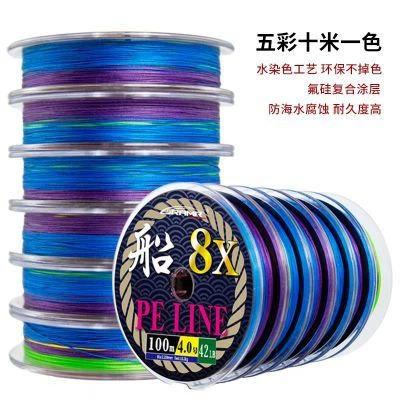
Color Multi color (10 meter/color)
Meters: 600m/about 650yard(support...